Which transformation has been applied to shape A to get shape B?
Shape moves without changing orientation.
The shape has been translated (slid across).

Transformations describe how shapes move or change through translation, reflection, rotation and enlargement. They link closely to coordinates, similarity and graph transformations.
A transformation changes the position, size or orientation of a shape.
The original shape is called the object, and the new shape is called the image.
In GCSE Maths, you need to recognise and describe four main transformations: translation, reflection, rotation and enlargement.
You should be able to recognise each transformation from a diagram and describe it using correct mathematical language.
A change to a shape’s position, size or orientation.
The original shape before a transformation.
The new shape after a transformation.
A movement of a shape without changing size or orientation.
A flip of a shape in a mirror line.
A turn of a shape around a fixed point.
A change in size using a scale factor.
The number that determines how much a shape is enlarged or reduced.
The point around which a shape rotates.
The point from which a shape is enlarged.
Describe using a vector.
Describe using the mirror line.
Give the angle, direction and centre.
Give the scale factor and centre.
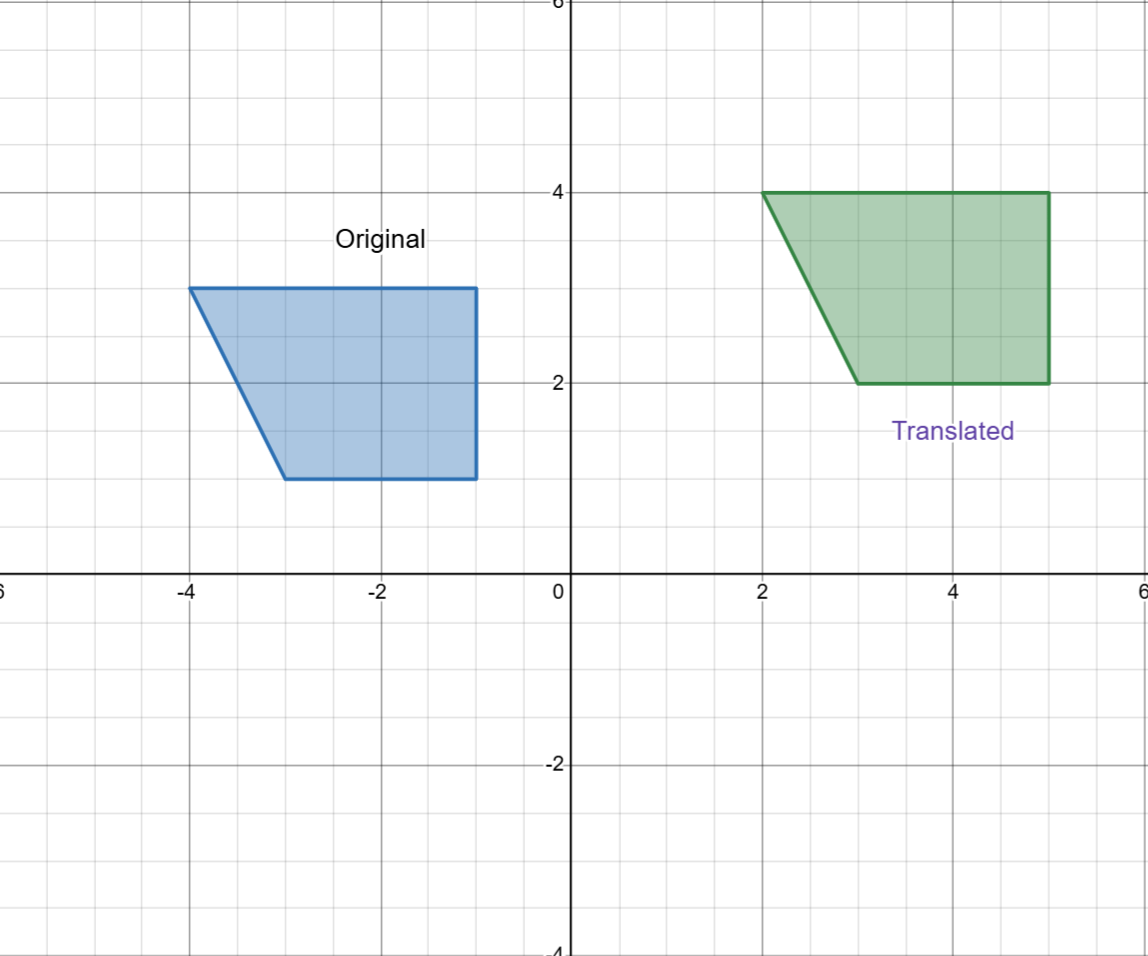
Translation
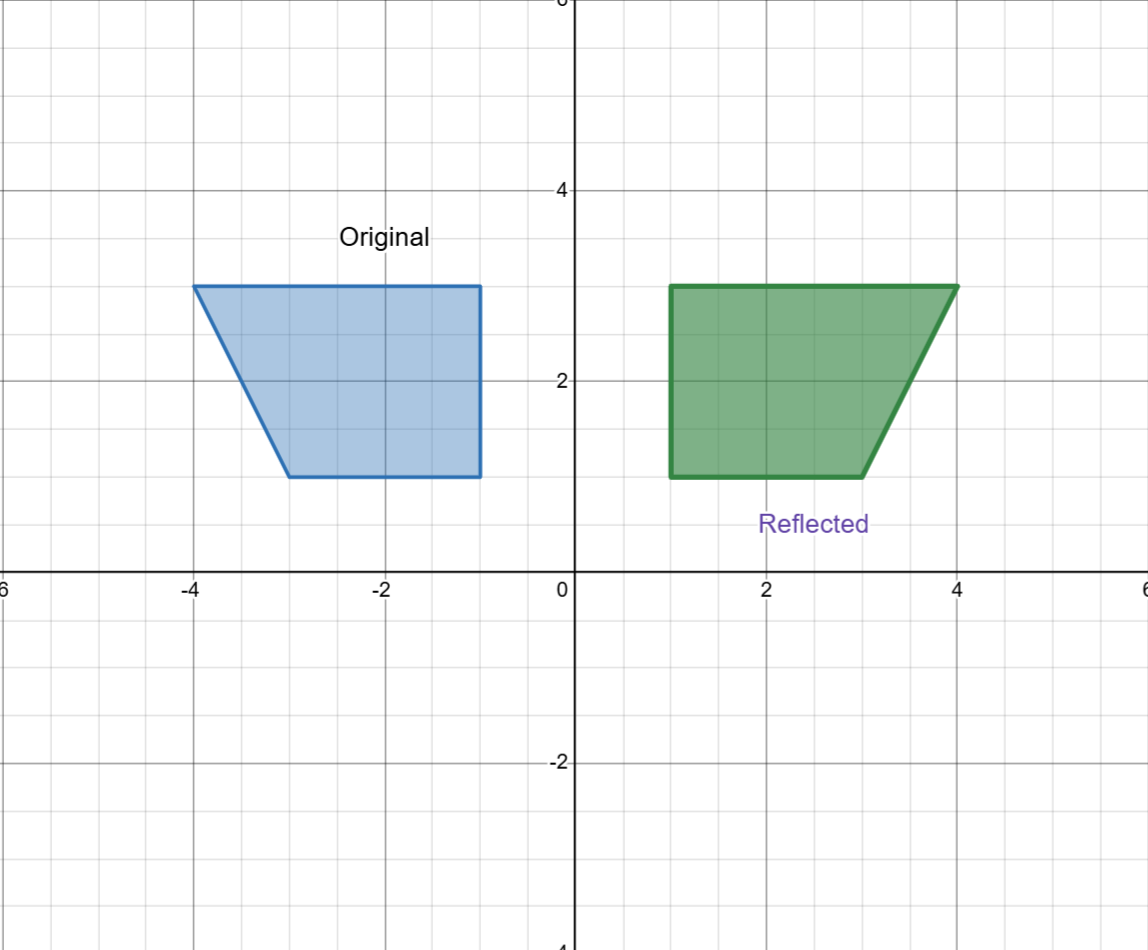
Reflection
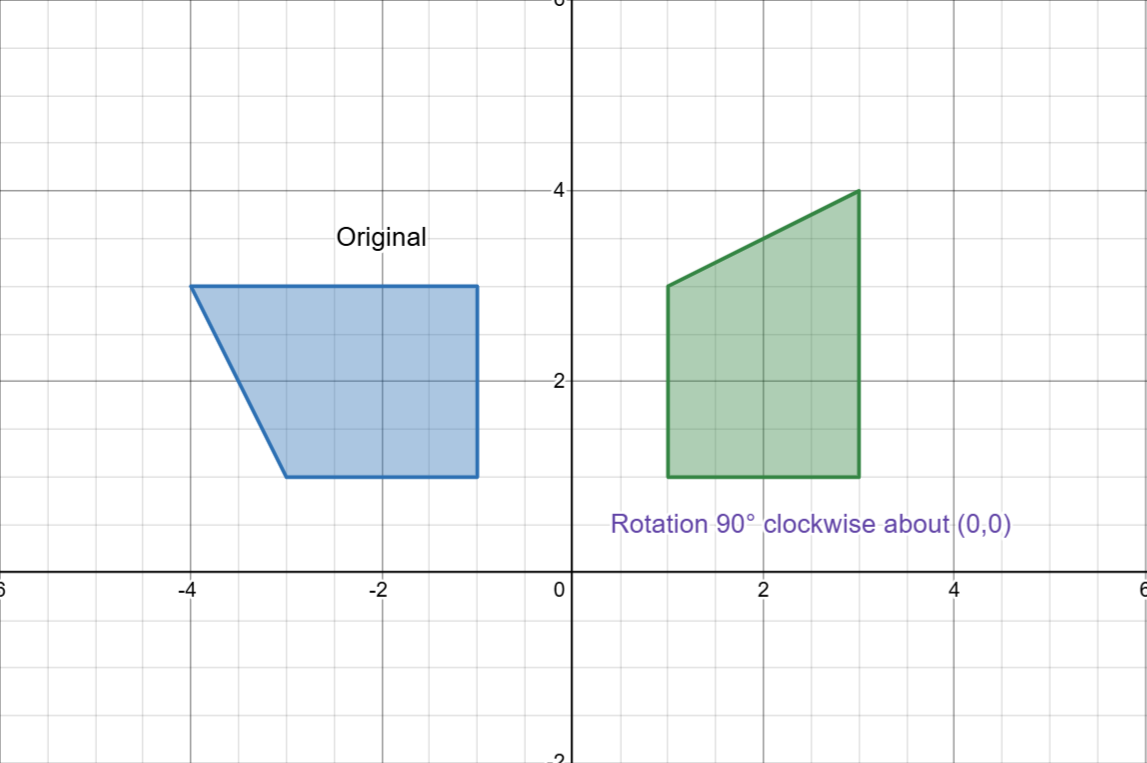
Rotation
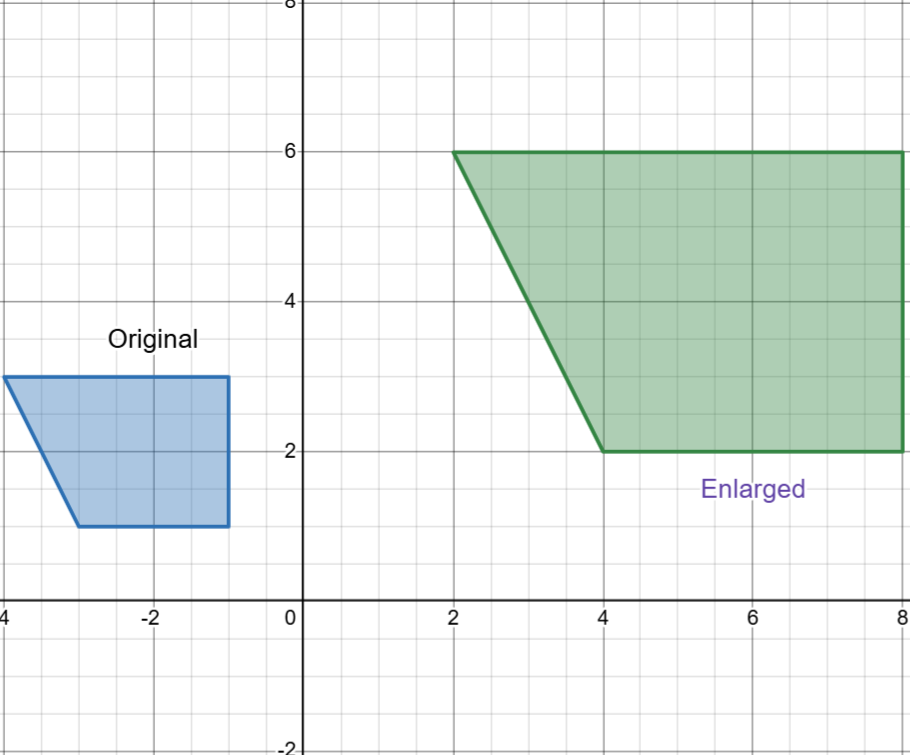
Enlargement
Give the vector only.
Give the exact mirror line.
Give the angle, direction and centre.
Give the scale factor and centre.
A transformation maps an object to an image. It can move, flip, turn or resize a shape.
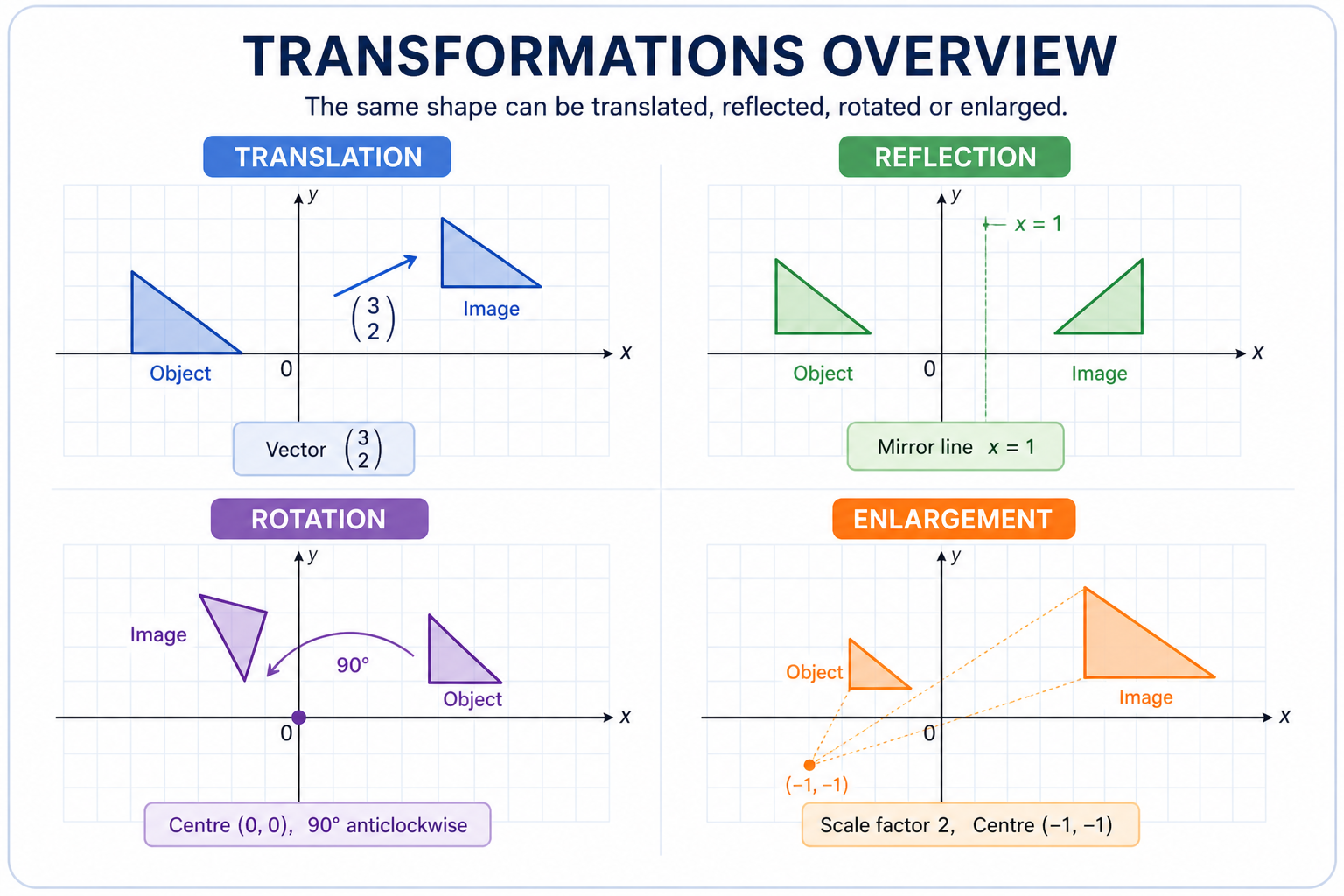
Moves a shape using a vector.
Flips a shape in a mirror line.
Turns a shape around a centre.
Changes size using a scale factor.
Every point moves the same distance and direction.
A reflection flips a shape across a mirror line.
A rotation turns a shape around a centre.
An enlargement changes size from a centre.
Vector
Mirror line
Angle, direction, centre
Scale factor, centre
Exam-style questions inspired by Edexcel GCSE Mathematics.
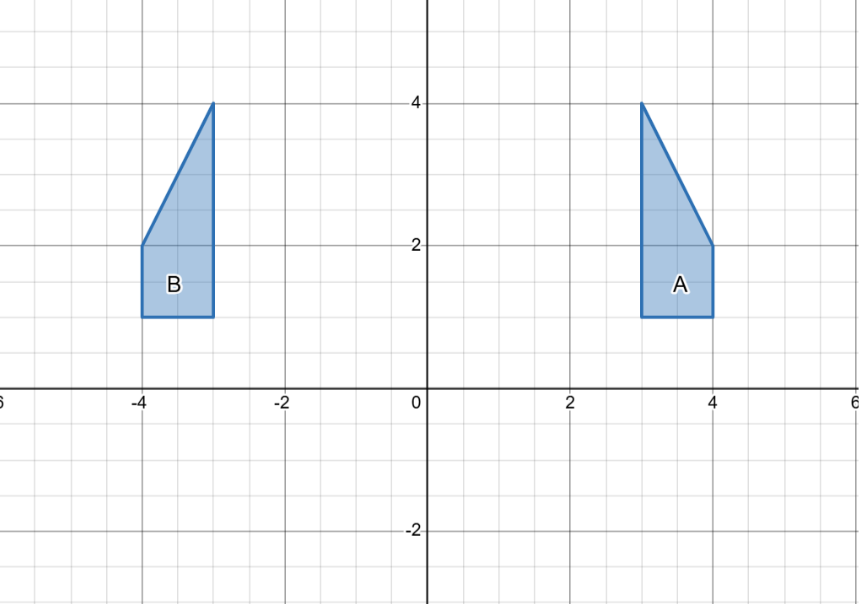
Describe fully the single transformation that maps shape A onto shape B.
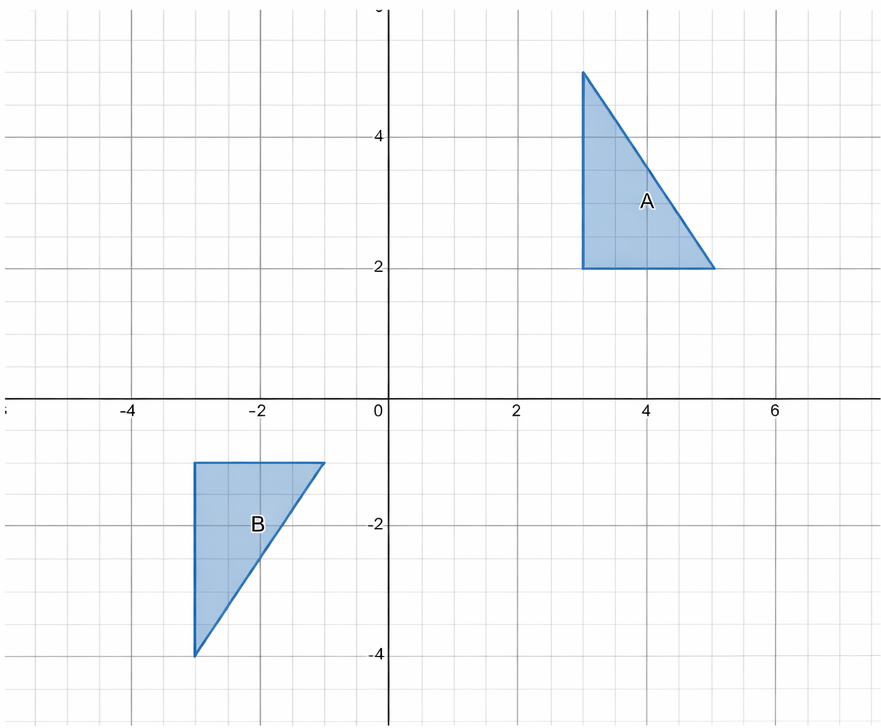
Shape A is reflected in the x-axis and then translated by the vector \( \begin{pmatrix} c \\ d \end{pmatrix} \).
Find the value of c and the value of d.
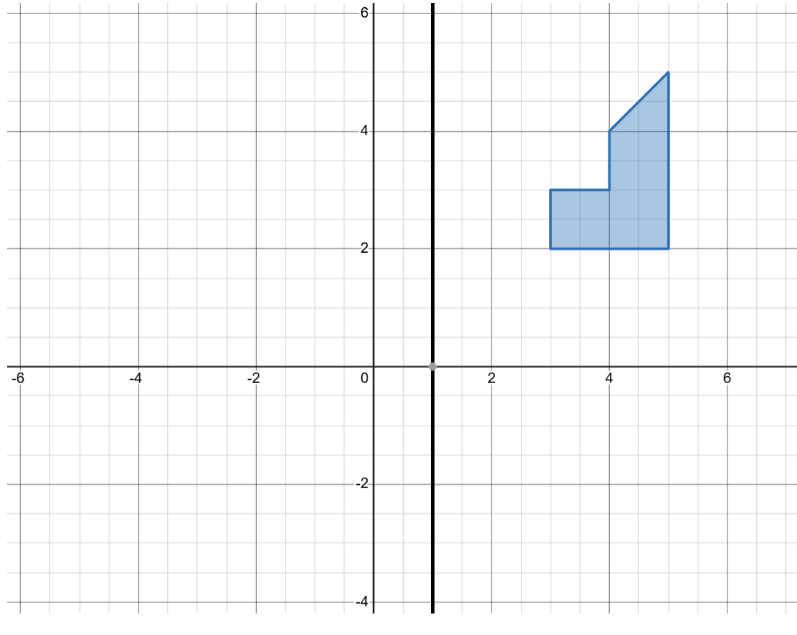
Reflect the shaded shape in the mirror line.
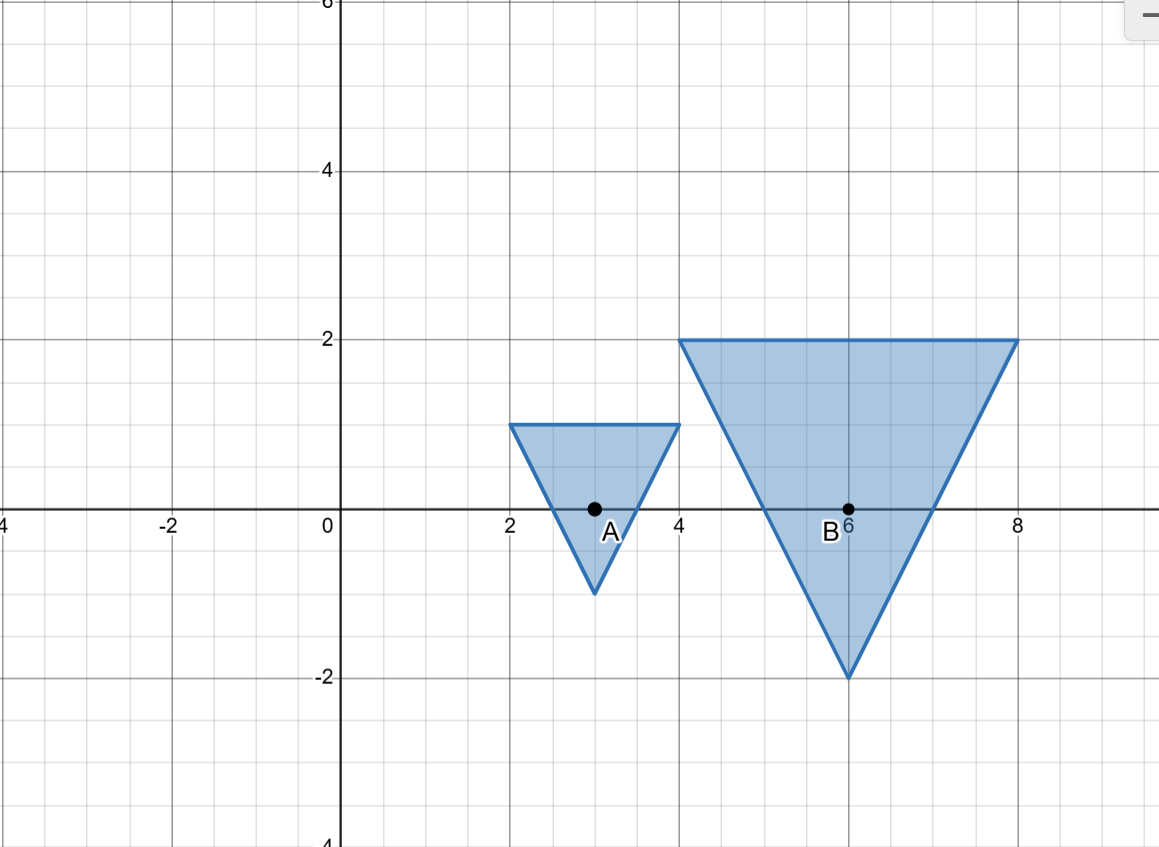
Here are two triangles on a grid. Triangle B is an enlargement of triangle A.
Write down the scale factor of the enlargement.
Exam-style questions based on the AQA GCSE Mathematics specification, focusing on clear reasoning, accurate diagram interpretation, and precise mathematical communication.
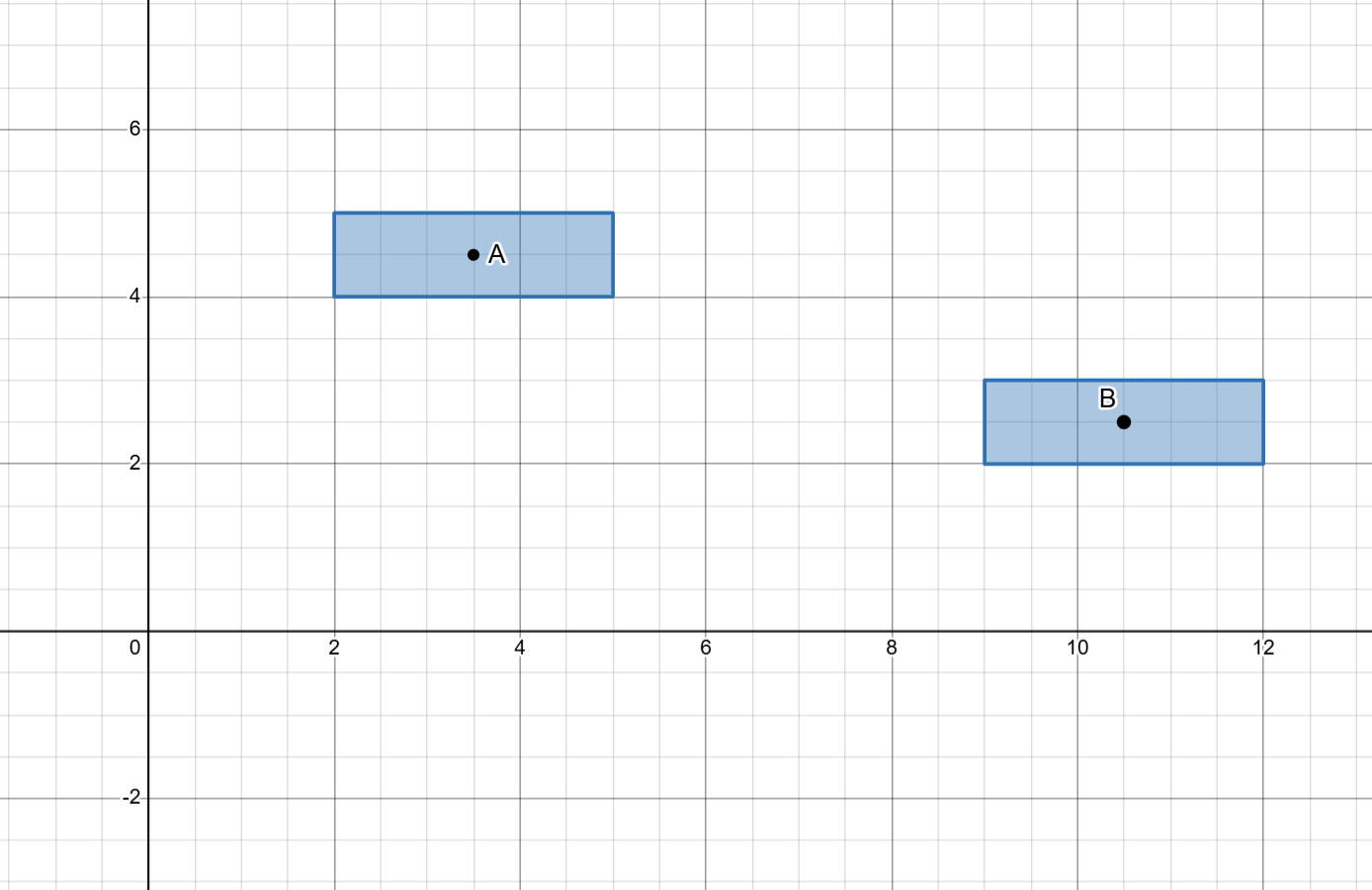
Work out the vector that translates shape A to shape B.
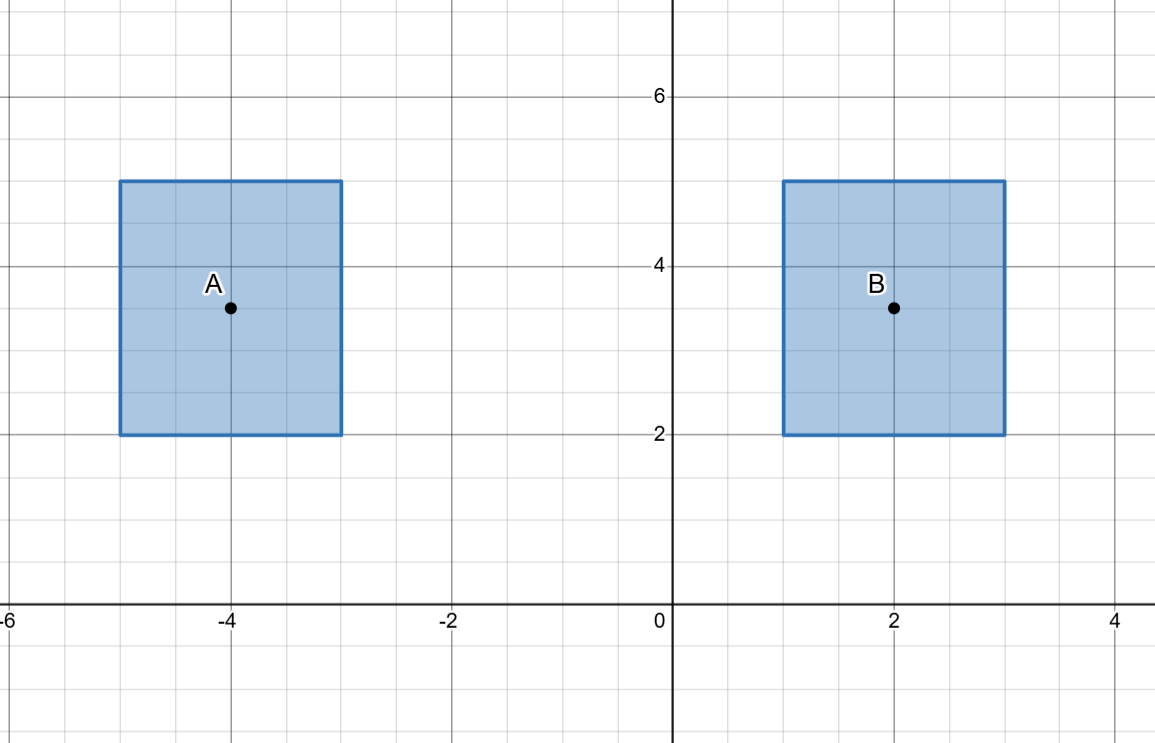
Rectangle A can be mapped onto rectangle B by a single transformation.
A student claims that the transformation is a reflection in the y-axis.
Is the student correct?
Tick one box. Yes ☐ No ☐
Give a reason for your answer.
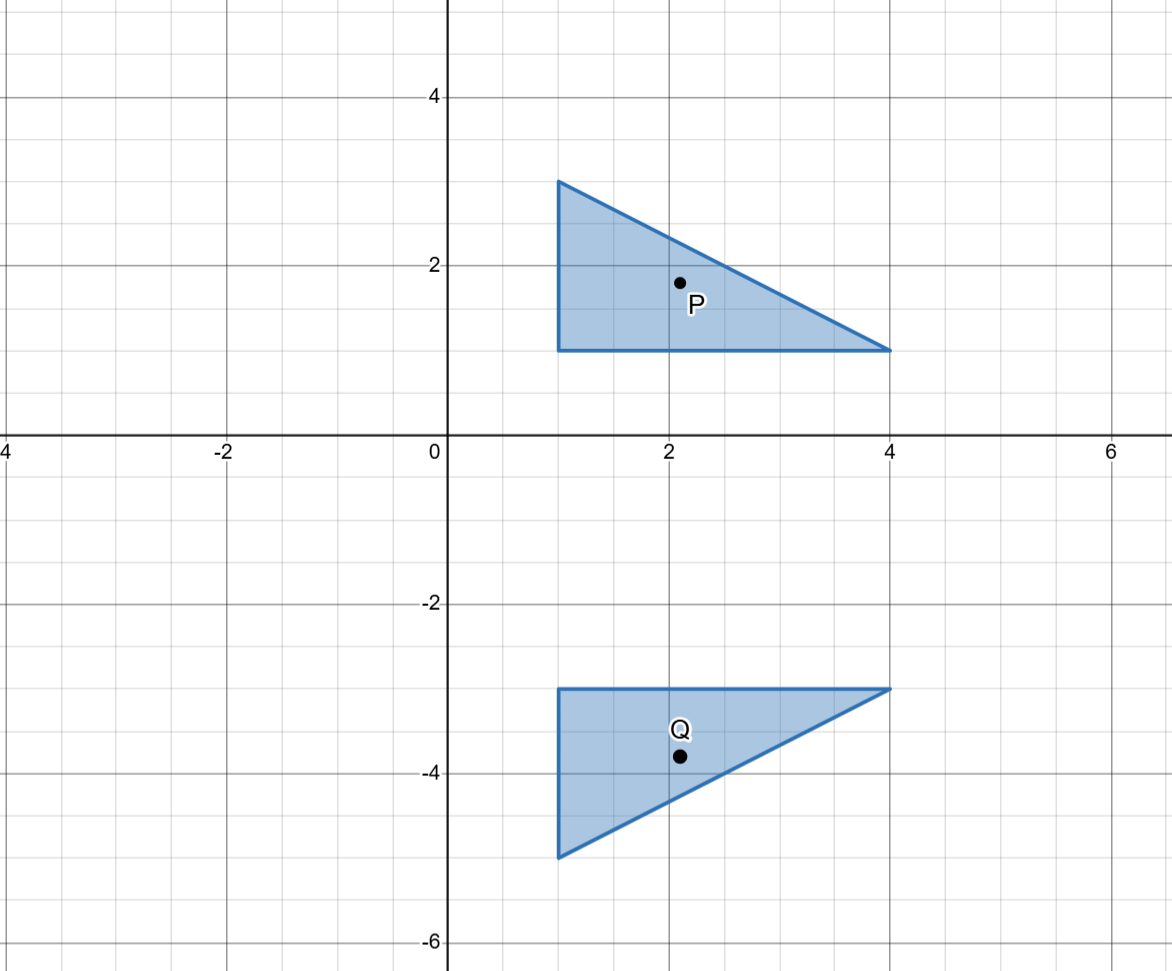
Here are two triangles, P and Q.
A student makes the following statement:
The transformation that maps triangle \(P\) onto triangle \(Q\) is a reflection in the line \(x = -1\).
Make one criticism of the student's statement.
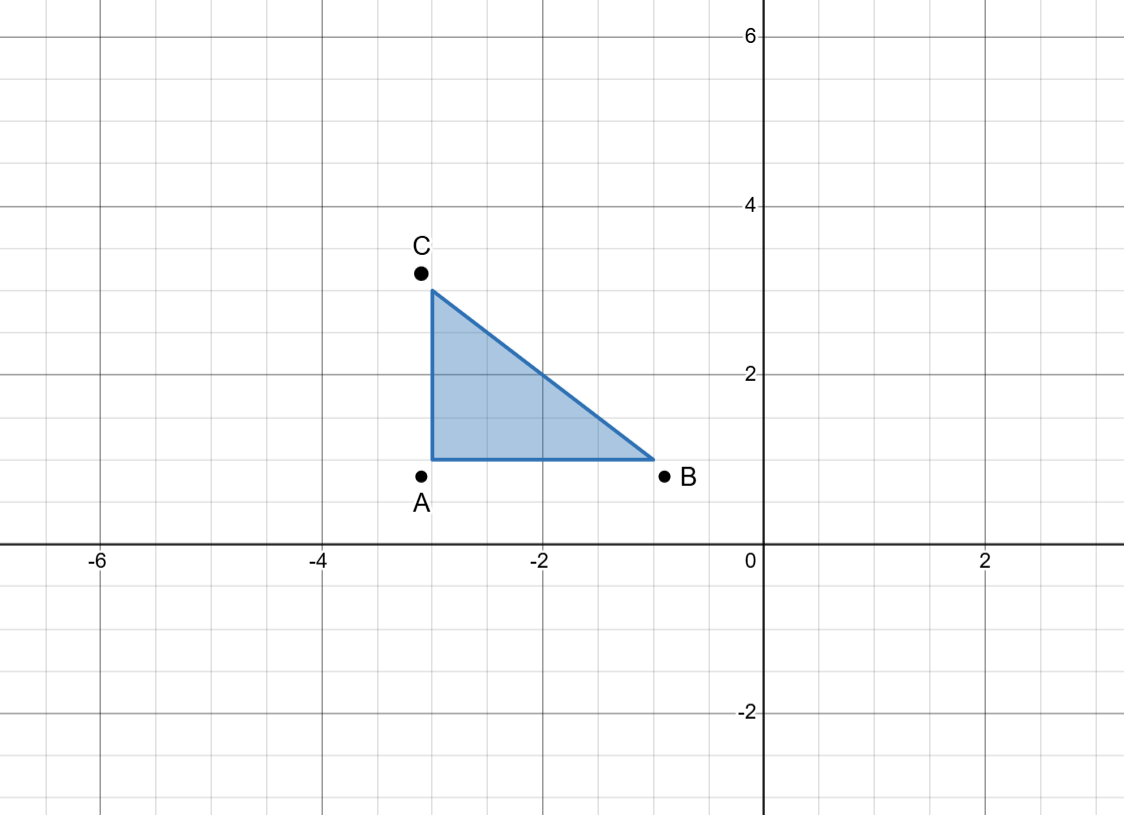
Here is triangle ABC on a coordinate grid.
Describe a single transformation that maps the triangle so that:
\(B\) remains fixed,
\(A\) maps to \((1, 1)\),
\(C\) maps to \((1, -1)\).
Exam-style questions aligned with OCR GCSE Mathematics, emphasising logical reasoning, problem-solving skills, and precise use of mathematical terminology.
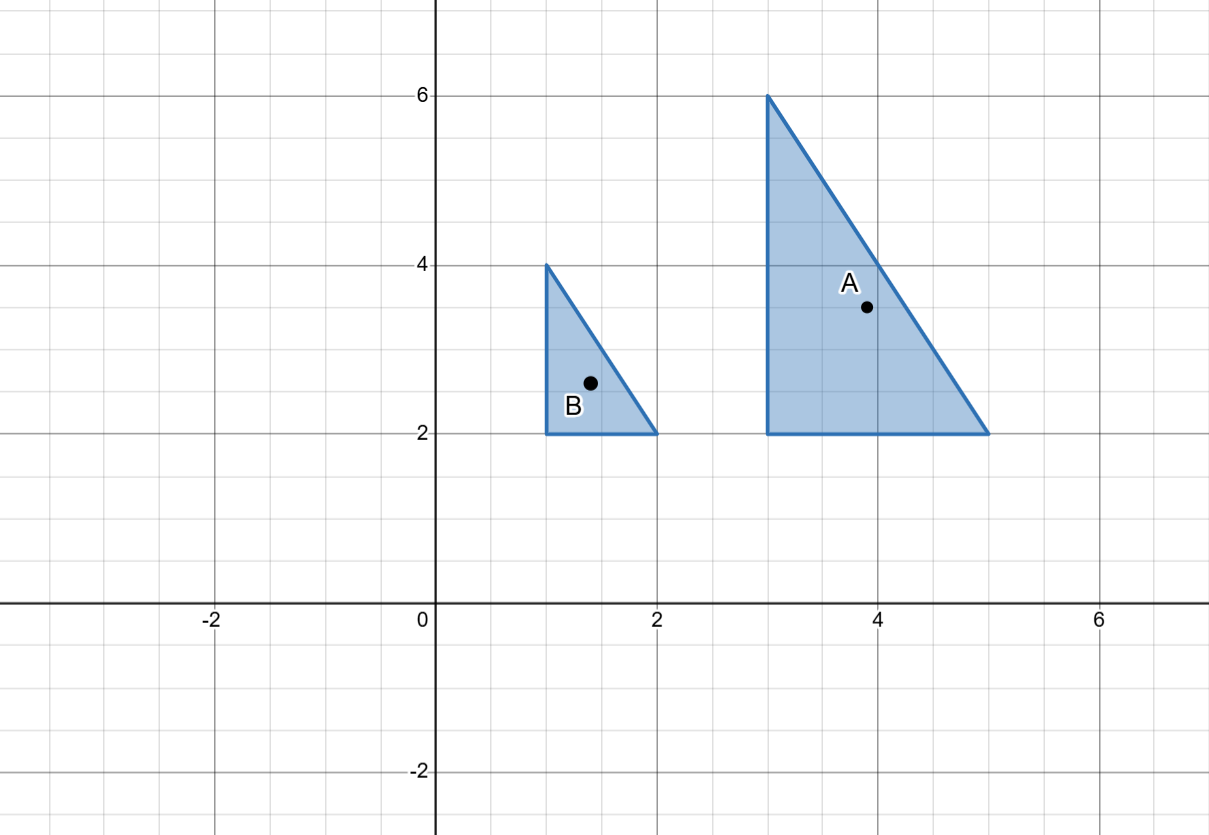
Triangle A and triangle B are drawn on a coordinate grid.
(a) Complete the following transformations of triangle A.
\(\text{(i) Draw the image of triangle } A \text{ after a rotation of } 180^{\circ} \text{ about } (0,0).\)
\(\text{(ii) Draw the image of triangle } A \text{ after a translation by the vector } \begin{pmatrix} 2 \\ -7 \end{pmatrix}.\)
\(\text{(b) Describe fully the single transformation that maps triangle } A \text{ onto triangle } B.\)
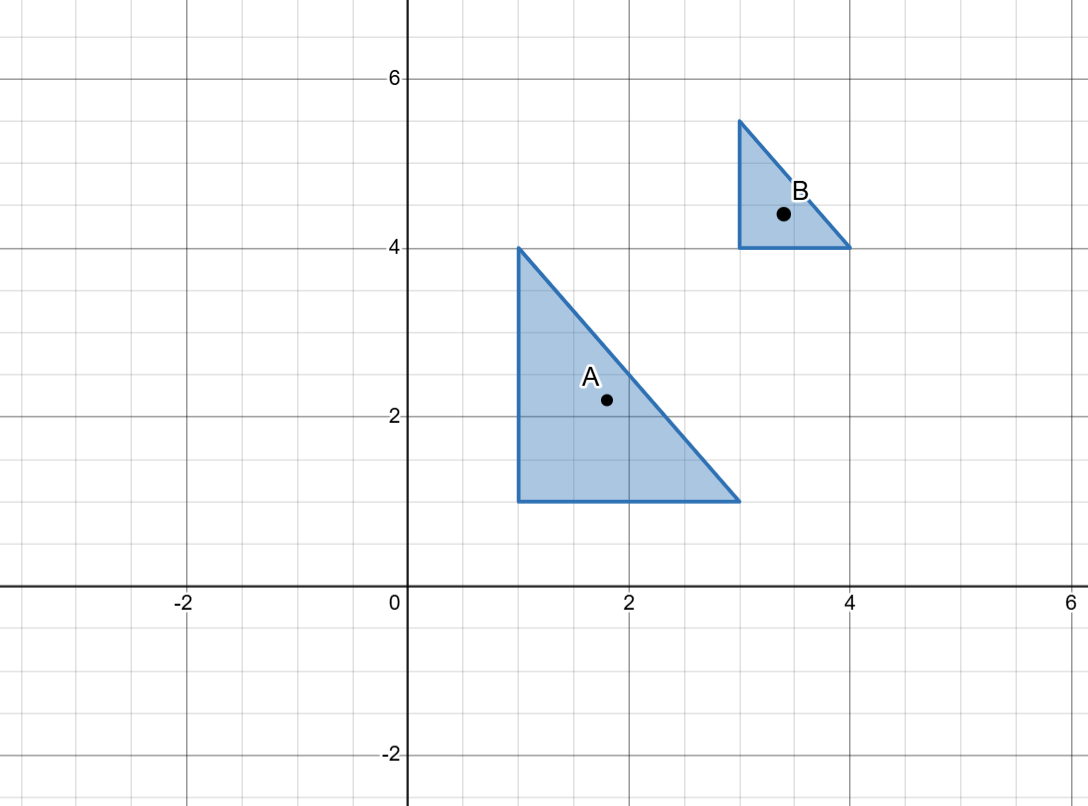
(a) Draw the image of triangle A after a reflection in the line \( y = -1 \).
(b) Describe fully the single transformation that maps triangle A onto triangle B.
Check whether the shape stayed the same size.
Ask: did it move, flip, turn or resize?
Track one point first, then confirm with another.
Give every detail needed for full marks.
Missing the centre or forgetting clockwise / anticlockwise.
Giving the wrong mirror line or measuring distance incorrectly.
Writing the vector in the wrong direction.
Forgetting the scale factor or using the wrong centre.
These are common mistakes students make when working with transformations in GCSE Maths.
A student gives the angle but not the direction.
Always state both the angle and the direction (clockwise or anticlockwise) for rotations.
A student describes the rotation without a centre.
Every rotation must include the centre of rotation as coordinates.
A student gives only part of the required information.
Include all details: rotation (angle, direction, centre), reflection (mirror line), translation (vector), enlargement (scale factor and centre).
A student gives the wrong direction or order.
Write vectors as \(\begin{pmatrix} x \\ y \end{pmatrix}\), where x is horizontal and y is vertical movement.
A student measures diagonally instead of perpendicular to the mirror line.
Reflection distances must be measured at right angles to the mirror line.
A student says “bigger” or “smaller”.
Always give the exact scale factor (e.g. scale factor 2 or 0.5).
A student uses an incorrect centre point.
Draw lines from corresponding points to find the correct centre of enlargement.
A student places the image on the same side.
A negative scale factor places the image on the opposite side of the centre of enlargement.
Practise performing and describing geometric transformations.
Recognise and apply translations, reflections, rotations and enlargements.
Which transformation has been applied to shape A to get shape B?
Translate the point (2, 3) by vector (4, -1). Write the new coordinates.
Which transformation flips a shape over a line?
Reflect the point (3, 2) in the y-axis. What are the new coordinates?
Which transformation changes the size of a shape?
A shape is enlarged by scale factor 2. A side was 3 cm. Find the new length.
Which transformation turns a shape around a point?
Rotate the point (2, 1) 180° about the origin. What are the new coordinates?
Reflect the point (4, -3) in the x-axis.
A shape is translated 3 right and 2 up. Write the vector.
Describe transformations fully, including vectors, centres and scale factors.
Describe the translation from A to B.
Which transformation maps shape A onto B?
A shape is enlarged by scale factor 3 from centre (0,0). A point is (2,1). Find its image.
Which transformation keeps size but changes orientation?
Rotate (3, 2) 90° anticlockwise about the origin.
A shape is enlarged with scale factor 1. What happens?
Reflect (−5, 2) in the y-axis.
Which transformation preserves distances and angles?
Rotate (4, −1) 180° about the origin.
A shape is enlarged by scale factor 0.5. What happens?
Practise translating, reflecting and rotating shapes on coordinate grids.
Translation, reflection, rotation and enlargement.
Include all key details such as direction, angle, centre or scale factor.
Translation, reflection and rotation.